English
 Arabic
 French
 German
 Indonesian


English
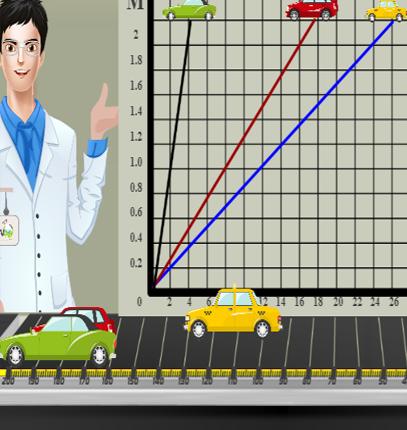
The goal of the experiment: experiment to learn the concept of speed and how we can measure it Exper......
Science
The goal of the experiment: experiment to learn the concept of speed and how we can measure it Experience Tools: different speed cars – stopwatch- measuring tape Steps of the experiment: The conclusion: Keywords (English): speed – motion – distance – time – speed measurement
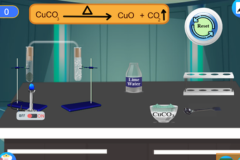
Unit one: chemical reactions. Lesson one: chemical reactions.Keywords (English): copper carbona......
Science
Unit one: chemical reactions. Lesson one: chemical reactions.Keywords (English): copper carbonate – heating – decomposition – carbon dioxide
Unit one: chemical reactions. Lesson one: chemical reactions.Keywords (English): thermal deco......
Science
Unit one: chemical reactions. Lesson one: chemical reactions.Keywords (English): thermal decomposition – sodium nitrate – heat – oxides – thermal reaction
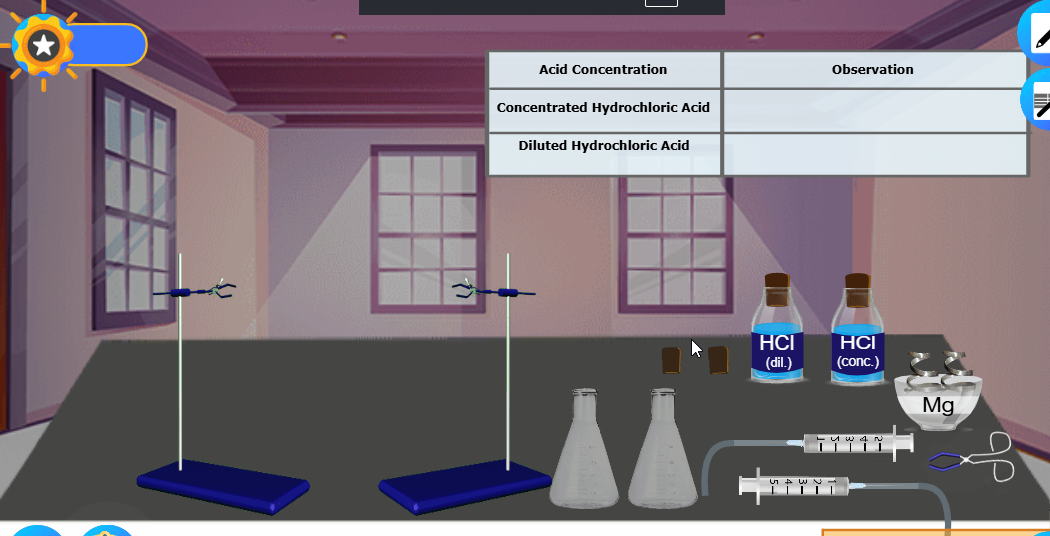
Unit One: Chemical Reactions. Lesson two: the speed of chemical reactions.Keywords (English): c......
Chemistry
Unit One: Chemical Reactions. Lesson two: the speed of chemical reactions.Keywords (English): concentration – reaction rate – reactants – collision frequency
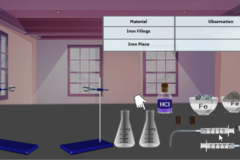
Unit One: Chemical Reactions. Lesson two: the speed of chemical reactions.Keywords (English): s......
Chemistry
Unit One: Chemical Reactions. Lesson two: the speed of chemical reactions.Keywords (English): surface area – reaction rate – reactants – collisions
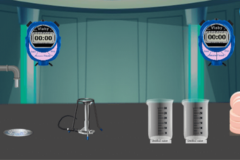
Objective To observe the effect of temperature on the rate of a chemical reactionTools Two glasses w......
Chemistry
Objective To observe the effect of temperature on the rate of a chemical reactionTools Two glasses with equal amounts of water, one hot and one cold Two effervescent tabletsSteps Place one tablet in the hot water and the other in the cold water Compare the rate of fizzing in both glassesObservation......
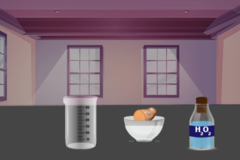
Unit One: Chemical Reactions. Lesson two: the speed of chemical reactions.Keywords (English): e......
Chemistry
Unit One: Chemical Reactions. Lesson two: the speed of chemical reactions.Keywords (English): enzymes – reaction rate – catalysts – biochemistry
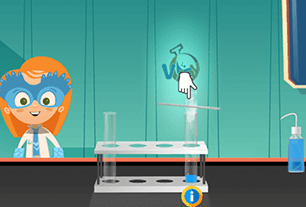
Detection of the chloride anionThis video shows how to do the experimenthttps://youtu.be/_2a2CeQxanw
biology
Detection of the chloride anionThis video shows how to do the experimenthttps://youtu.be/_2a2CeQxanw
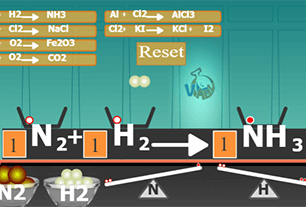
Keywords: Equation balancing – Chemical equilibrium – Reactants – Products – Atoms
Science
Keywords: Equation balancing – Chemical equilibrium – Reactants – Products – Atoms
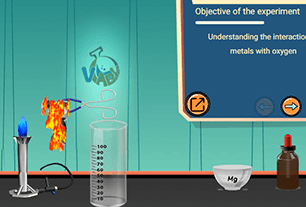
Keywords: Chemical properties – Metals – Oxidation – Oxides - Magnesium
Science
Keywords: Chemical properties – Metals – Oxidation – Oxides - Magnesium
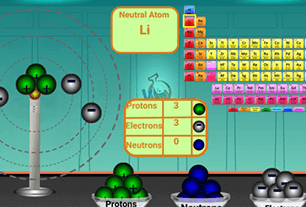
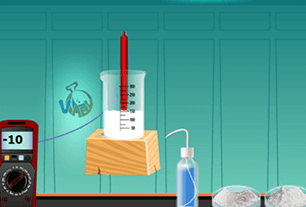
Endothermic reactionsKeywords (English): endothermic reactions – energy absorption – thermal change
Chemistry
Endothermic reactionsKeywords (English): endothermic reactions – energy absorption – thermal change
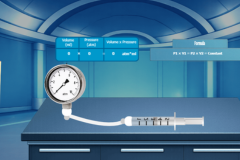
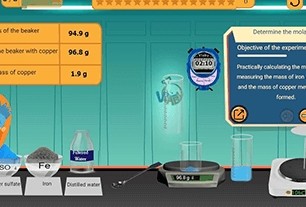
Determine the molar ratiomole ratio – moles – stoichiometry – chemical reaction
Chemistry
Determine the molar ratiomole ratio – moles – stoichiometry – chemical reaction
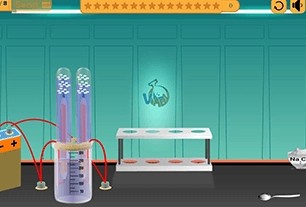
Investigation of the process of electrolysis of waterelectrolysis of water – oxygen – hydrogen – ele......
Science
Investigation of the process of electrolysis of waterelectrolysis of water – oxygen – hydrogen – electric current
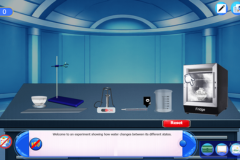
Three states of matterThis experiment shows how water changes between its three states due to temper......
Science
Three states of matterThis experiment shows how water changes between its three states due to temperature. Ice melts when heated to become liquid water, then turns into vapor with continued heating. When the vapor touches a cold surface, it condenses back into water droplets.states of matter – solid......
Keywords: Equilibrium – Equal forces – Rest – Uniform motion
Chemistry
Keywords: Equilibrium – Equal forces – Rest – Uniform motion
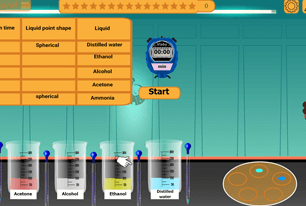
Comparing evaporation ratesKeywords (English): evaporation – evaporation rate – temperature – surfa......
Chemistry
Comparing evaporation ratesKeywords (English): evaporation – evaporation rate – temperature – surface area – type of liquid
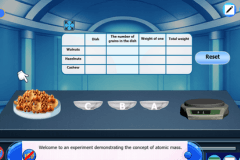
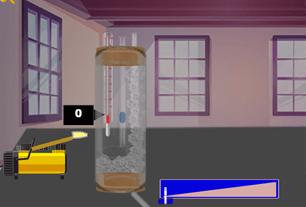
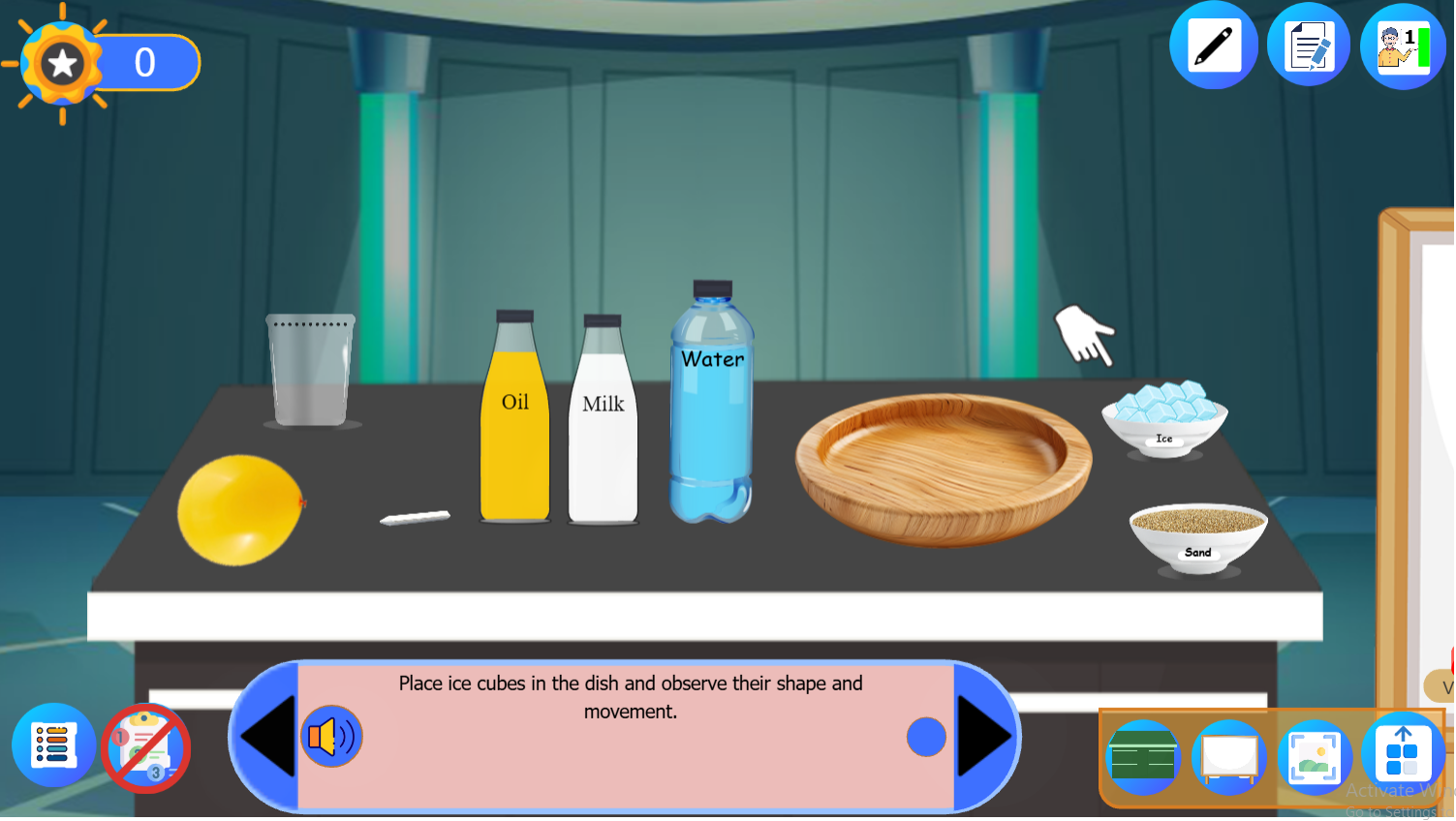
Keywords: States of matter – Shape – Flow – Solid – Liquid – Gas
Science
Keywords: States of matter – Shape – Flow – Solid – Liquid – Gas
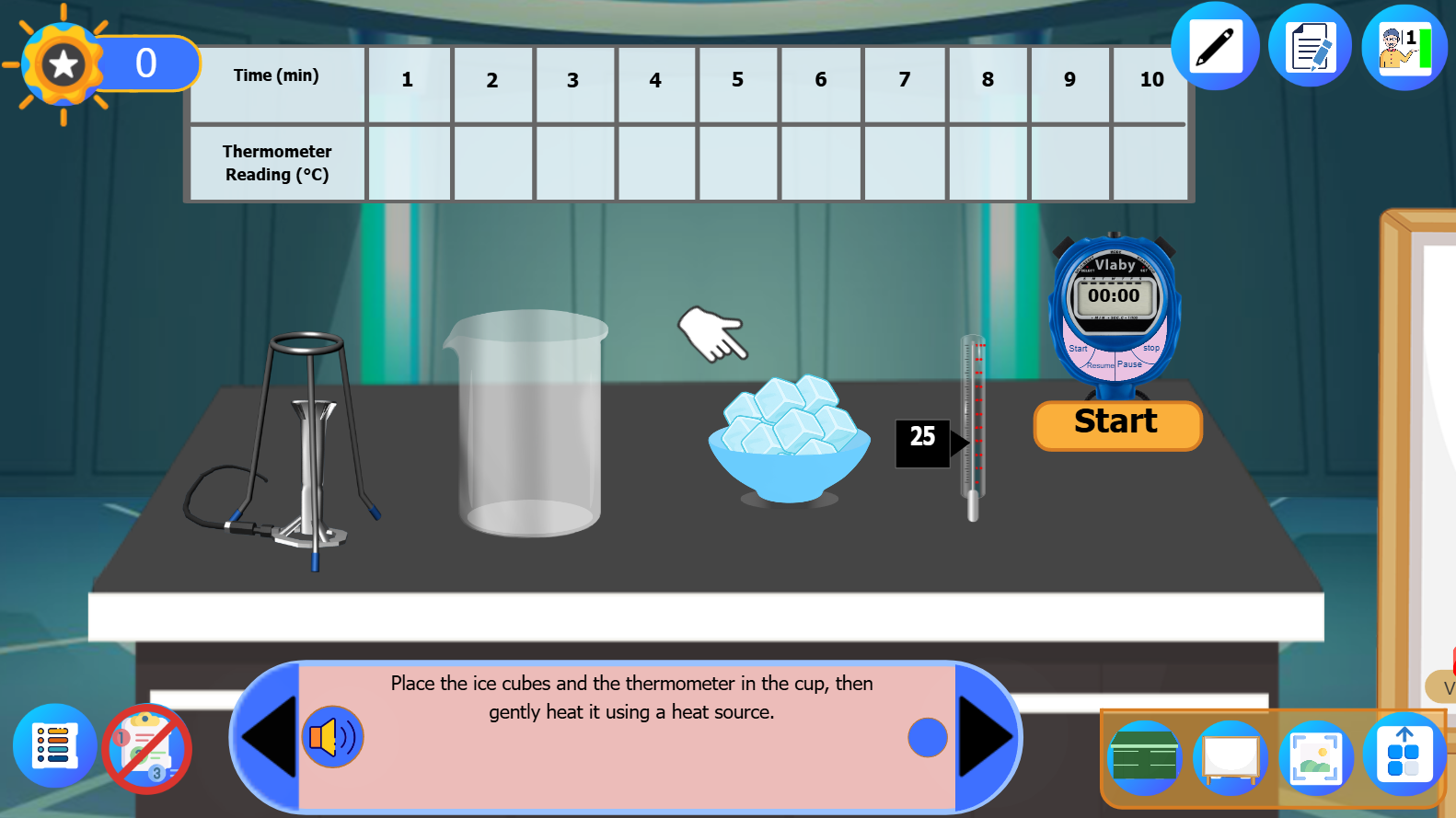
Keywords: Physical state change – Melting – Freezing – Evaporation – Condensation
Science
Keywords: Physical state change – Melting – Freezing – Evaporation – Condensation
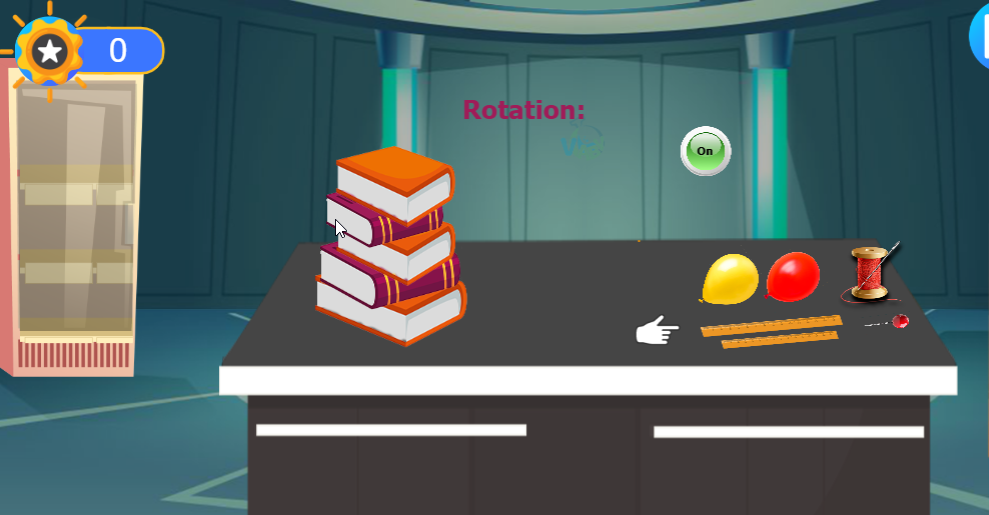
Materials: Properties and Changes
Objective: To prove that gases have volume and occupy spaceMaterials: Two equal balloons – two ruler......
Materials: Properties and Changes
Objective: To prove that gases have volume and occupy spaceMaterials: Two equal balloons – two rulers – 15 cm strings – a heavy book – adhesive tape – clips – scissorsSteps: Inflate both balloons to the same size and tie them tightly Cut three pieces of string Tie both balloons to one ruler evenly o......
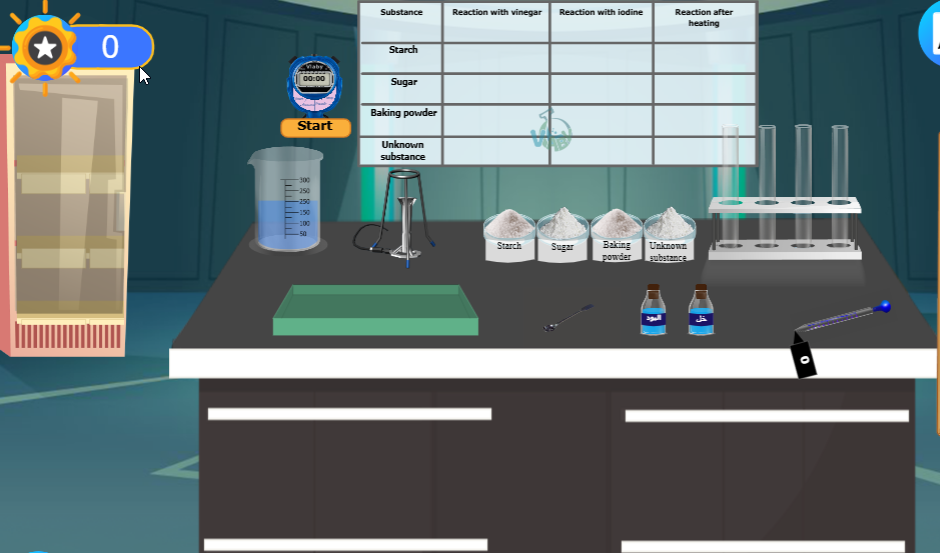
Objective: To identify the compounds that make up an unknown substance by comparing its reactions wi......
Science
Objective: To identify the compounds that make up an unknown substance by comparing its reactions with known substances such as starch, sugar, and baking powder.Materials: Test tubes, sugar, starch, baking powder, unknown substance, water, iodine solution, sodium bicarbonate solution, dropper.Steps:......
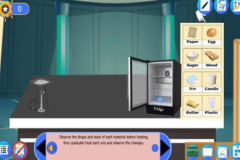
Objective: To distinguish between reversible and irreversible reactions.Materials: Candle – white pa......
Investigate Matter
Objective: To distinguish between reversible and irreversible reactions.Materials: Candle – white paper – egg – ice cubes – sugar – butter – heat source – heat-resistant container – tongs.Procedure: Observe each material before heating. Heat each material gradually and record the changes. Cool each......
Chemistry
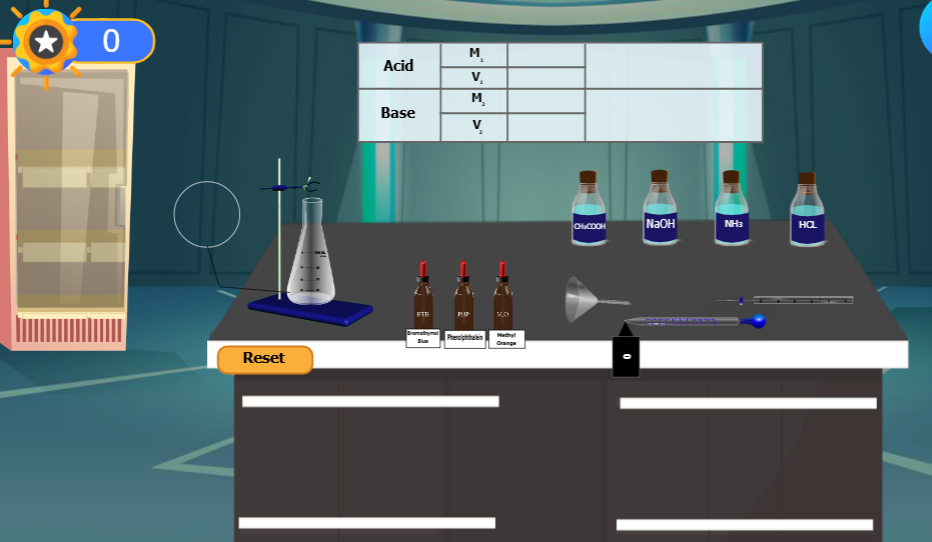
Objective To determine the concentration of an unknown solution through an acid-base reaction using the equivalence point.Tools Beaker – burette – burette stand – unknown acid or base solution – standard solution of known concentration – suitable indicator – graduated cylinderSteps Place a measured......
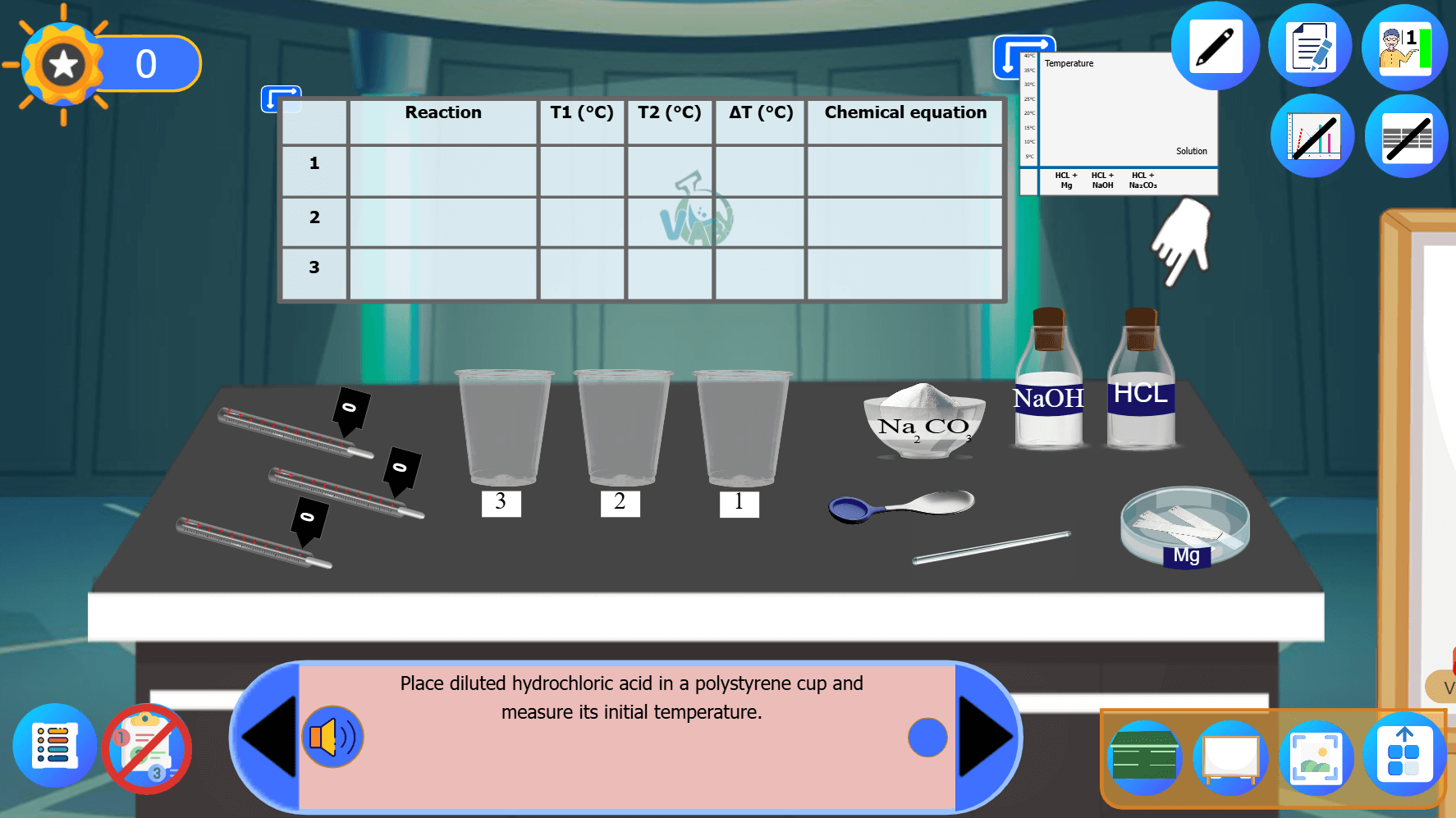
Objective: To prove that some chemical reactions are accompanied by the release of thermal energy, w......
Science
Objective: To prove that some chemical reactions are accompanied by the release of thermal energy, which leads to an increase in the temperature of the surrounding medium.Materials: Dilute hydrochloric acid – Magnesium ribbon – Sodium hydroxide solution – Sodium carbonate – Polystyrene cups – Glass......
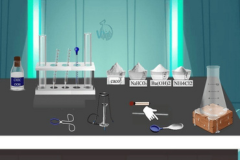
Objective: To identify chemical reactions that absorb thermal energy from the surroundings, leading......
Science
Objective: To identify chemical reactions that absorb thermal energy from the surroundings, leading to a decrease in temperature.Tools: Barium hydroxide - Ammonium chloride - Sodium bicarbonate - Dilute acid - Calcium carbonate - Glass flask - Insulated cup - Thermometer - Heat sourceSteps: Barium h......
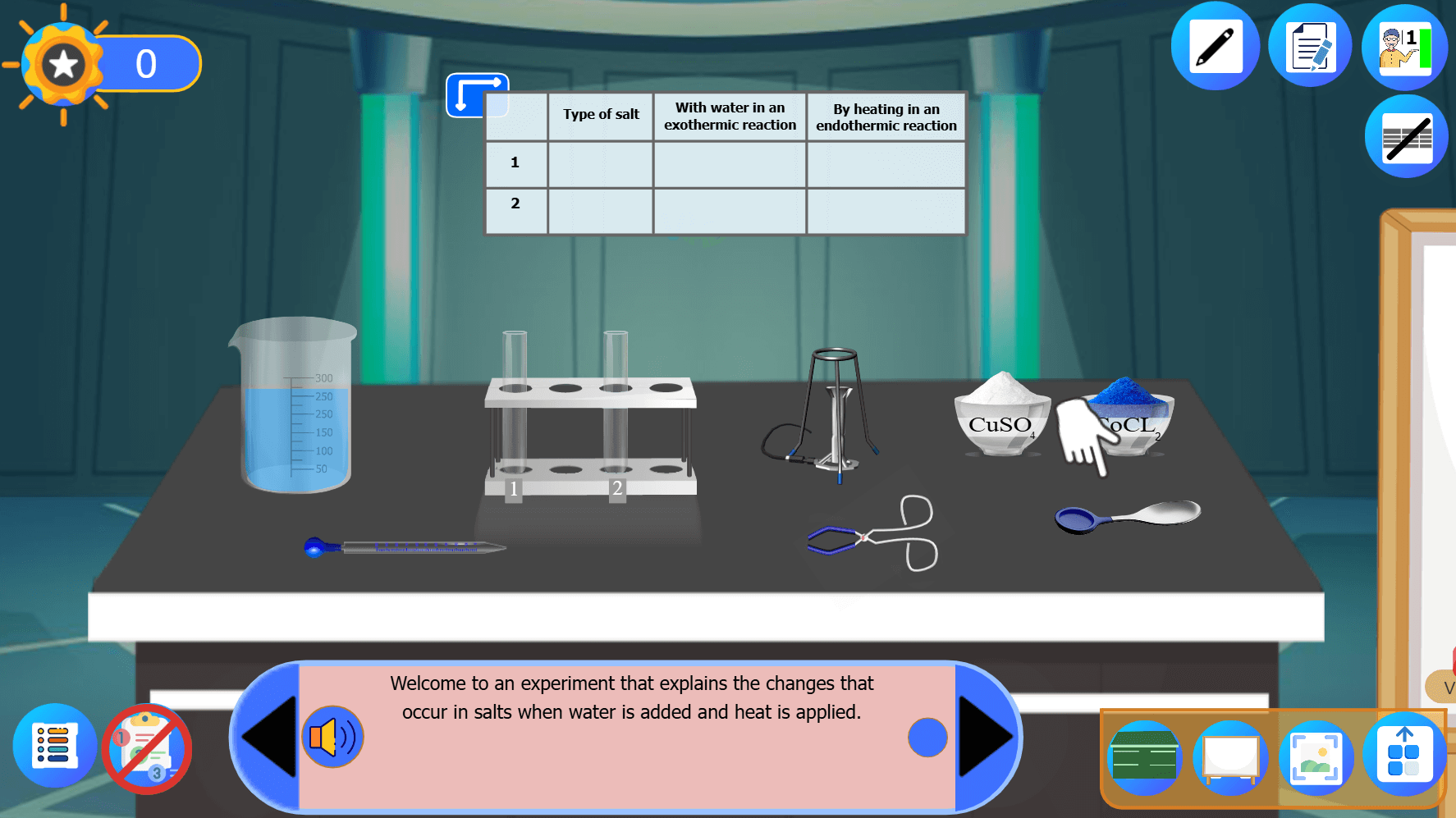
Objective: To identify the difference between hydrated and anhydrous salts and to explain the effect......
Science
Objective: To identify the difference between hydrated and anhydrous salts and to explain the effect of adding water and heating on some salts.Materials: Anhydrous copper sulfate (CuSO₄) – Anhydrous cobalt chloride (CoCl₂) – Distilled water – Dropper – Test tubes – Heat source (Bunsen burner or elec......
Objective: Preparation of ethene gas from ethyl alcohol (ethanol) and identification of the dehydrat......
Organic chemistry
Objective: Preparation of ethene gas from ethyl alcohol (ethanol) and identification of the dehydration reaction of alcohols.Materials: Bunsen burner _ Round-bottom flask _ Thermometer _ Ethanol (ethyl alcohol) _ Concentrated sulfuric acid _ Bottle containing sodium hydroxide solution _ Water trough......

© All Rights Reserved @ 2026 For VLaby - Powered By VLaby.